1. Brand Overview
The United States Marine Corps (USMC) is one of the six branches of the U.S. Armed Forces and serves as the marine expeditionary force of the United States. It was established on November 10, 1775, during the American Revolutionary War, and has since maintained a reputation for elite, rapid‑response combat capability both on land and at sea.
Headquartered at the Pentagon and operating under the Department of the Navy, the Marine Corps is tasked with conducting amphibious warfare and expeditionary operations, often serving as the first force in combat or crisis scenarios. Known for its rigorous training and warrior ethos, the USMC motto is “Semper Fidelis” (“Always Faithful”), which reflects the Marine commitment to duty, honor, and country.
2. Logo History
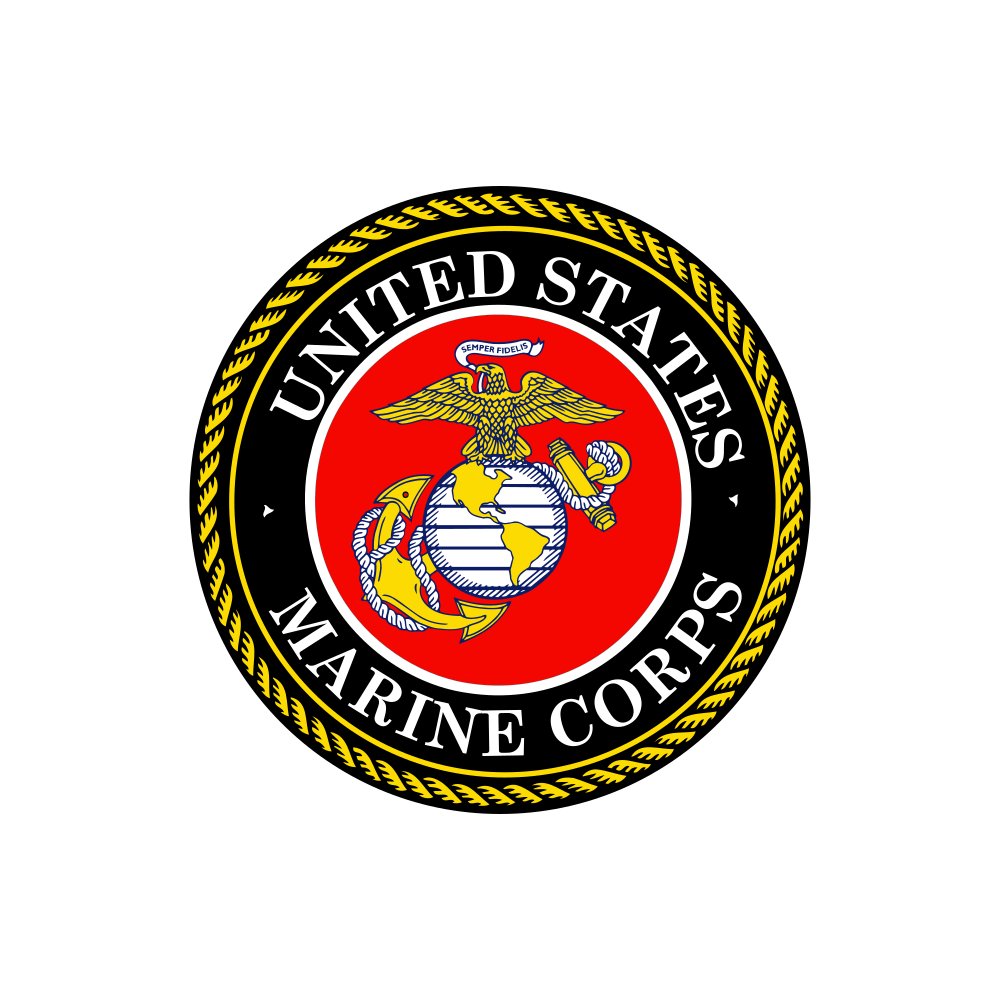
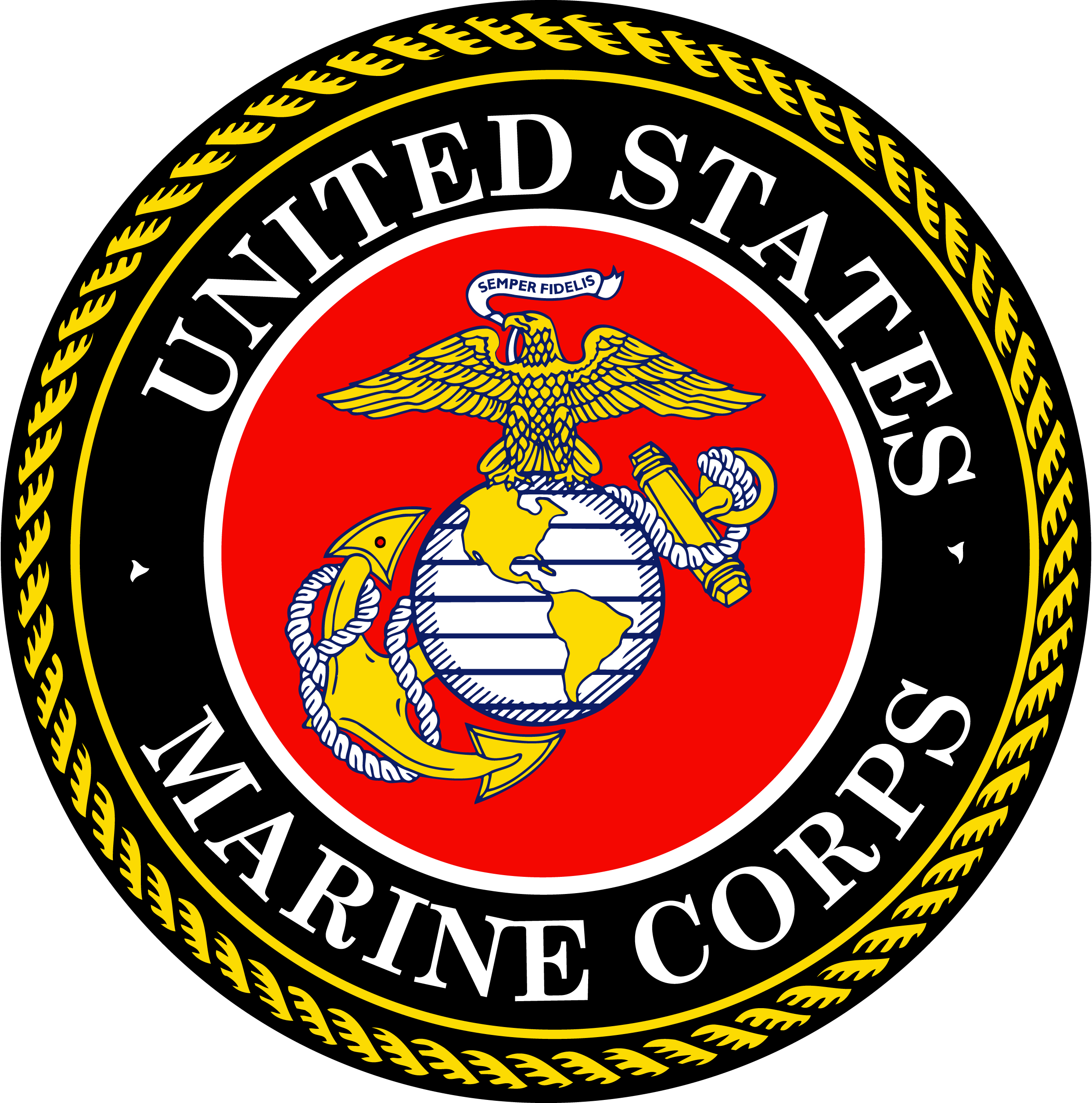
The primary emblem associated with the United States Marine Corps is the Eagle, Globe, and Anchor (EGA) — a crest and insignia that has symbolized the Corps since the 19th century:
Early Use and Adoption
- In 1868, the Marine Corps adopted the Eagle, Globe, and Anchor as its official emblem under the leadership of Commandant Jacob Zeilin.
- The design was inspired by the British Royal Marines’ emblem but was modified to reflect American identity and Marine Corps mission.
Refinements Over Time
- Through the late 19th and early 20th centuries, the core design elements remained stable while artistic details and presentation were refined to improve clarity, manufacturability, and symbolism.
- The contemporary USMC emblem — shown in the PNG/SVG — has been used consistently throughout modern Marine Corps history, including on uniforms, vehicles, flags, official documents, and ceremonial materials.
3. Logo Design Meaning
The Eagle, Globe, and Anchor emblem is rich with symbolic meaning tied to the Marine Corps’ mission, heritage, and values:
Eagle
- The American bald eagle represents the United States and the Marine Corps’ service to the nation.
- The eagle faces toward its right (the viewer’s left), symbolizing forward vigilance, readiness, and commitment.
Globe
- The globe signifies the Corps’ worldwide presence and readiness to serve across the globe.
- It represents the Marines’ role in expeditionary warfare — able to project force anywhere in the world.
Anchor
- The fouled anchor (an anchor with a rope or chain wrapped around it) reflects the Marine Corps’ naval heritage and close ties to the U.S. Navy.
- Marines have historically served aboard ships and performed amphibious landings, and the anchor pays homage to those maritime roots.
Fouled Anchor
- The anchor’s “fouled” appearance — rope or chain encircling it — is a longstanding naval symbol representing the challenges and complexities of sea service and the perseverance required to overcome them.
Together, these elements express the Marine Corps’ commitment to national defense, global reach, and maritime expeditionary capability.
4. Colour & Style
Although the PNG/SVG version you referenced may use a neutral style (e.g., black and white), the traditional USMC emblem is commonly seen in the following colours:
Gold (Eagle & Globe)
- Gold signifies excellence, achievement, and honor — qualities Marines strive for in service.
- When worn on uniforms (especially dress blues), the gold EGA conveys tradition and distinction.
Silver or Pewter (Anchor)
- The anchor is often rendered in silver, pewter, or subdued metallic tones to differentiate it from the eagle and globe.
- Silver suggests strength, reliability, and nautical tradition.
Color Variations
- On flags, official signage, and patches, the emblem may be rendered in red and gold to reflect the Marine Corps’ official colours (scarlet and gold).
- Red signifies blood shed in defense of the nation, and gold corresponds to excellence and high achievement.
5. Brand Identity & Cultural Significance
The USMC emblem is one of the most widely recognized military symbols in the world, and it conveys deep meaning both within and outside the Corps:
Service and Sacrifice
- The emblem represents countless generations of Marines who have served in conflicts from the Indian Wars and World Wars to modern operations in the Middle East.
- It reflects discipline, courage, and commitment — core values instilled in every Marine.
Global Presence
- Marines serve as the nation’s rapid‑response force, whether responding to combat operations, humanitarian missions, or strategic deployments around the globe.
- The globe in the EGA embodies this readiness and worldwide reach.
Heritage
- The emblem preserves the Marine Corps’ rich history from 1775 to the present, unifying past and present Marines under a single visual identity.
Cultural Icon
- The logo is widely used on uniforms, official documents, flags, buildings, vehicles, awards, and merchandise.
- It is often worn with pride by Marines, veterans, and supporters worldwide as a symbol of service and sacrifice.
6. FAQs (Frequently Asked Questions)
Q: What does the United States Marine Corps logo represent?
A: It represents the Marine Corps’ mission to serve the United States globally, combining national identity (eagle), worldwide reach (globe), and maritime heritage (anchor).
Q: What do the colours of the emblem mean?
A: Gold symbolizes achievement and honor, silver/pewter suggests strength and naval tradition, and red (when used) recalls sacrifice and courage.
Q: When was the emblem adopted?
A: The Eagle, Globe, and Anchor emblem was officially adopted in 1868 and has been refined over the years for use in uniforms and official materials.
Q: Is the eagle facing a specific direction?
A: Yes — the eagle typically faces its right (the viewer’s left), symbolizing forward vigilance and readiness.
Q: What does “Semper Fidelis” mean?
A: “Semper Fidelis” means “Always Faithful”, a motto that encapsulates the Marine Corps’ enduring commitment to duty, country, and fellow Marines.