United Nations Development Programme Logo – Brand Overview, Logo History, Design Meaning & Color Philosophy
The UNDP logo is instantly associated with global development, sustainability, and international cooperation. As the visual signature of one of the world’s leading development organizations, this logo communicates authority, trust, and purpose. Whether you’re downloading the UNDP logo in PNG or SVG format or simply curious about its visual identity, this detailed article breaks down everything you need to know — from the organization’s background and logo evolution to the deeper meaning embedded in its design and color choices.
Brand Overview
The United Nations Development Programme (UNDP) is the United Nations’ global development network. Established to help countries achieve sustainable development, reduce poverty, strengthen governance, and promote peace and resilience, UNDP works in nearly every country around the world. It partners with governments, civil society, and private sectors to address complex development challenges such as climate change, inequality, and crisis recovery.
UNDP’s mission centers on supporting countries to achieve the Sustainable Development Goals (SDGs) — a set of universal objectives that aim to end poverty, protect the planet, and ensure prosperity for all. The organization plays a strategic role in convening stakeholders, providing policy advice, mobilizing resources, and sharing knowledge. Because of its global scope and collaborative approach, UNDP’s logo serves as a powerful symbol of international solidarity and purpose.
Logo History
The UNDP logo has evolved alongside the organization’s efforts and status within the global community. Its design reflects a balance between institutional gravitas and modern clarity.
Early Visual Identities
In its early years, UNDP used branding that emphasized formal text and structure, consistent with official UN visual standards. The focus was on clarity and consistency with United Nations identity principles.
Modern Standardization
Over time, the logo was standardized across UNDP’s communications, aligning more closely with modern graphic design principles. The current form is clean, proportionate, and optimized for use in diverse contexts — from print materials to digital platforms, signage, and outreach campaigns.
This evolution mirrors UNDP’s transformation from a primarily operational agency into a thought leader and convener on global development issues. The consistent presence of the logo strengthens recognition worldwide.
Design Meaning
Every design decision in the UNDP logo carries meaning and intent that aligns with the organization’s mission.
1. Simple Wordmark
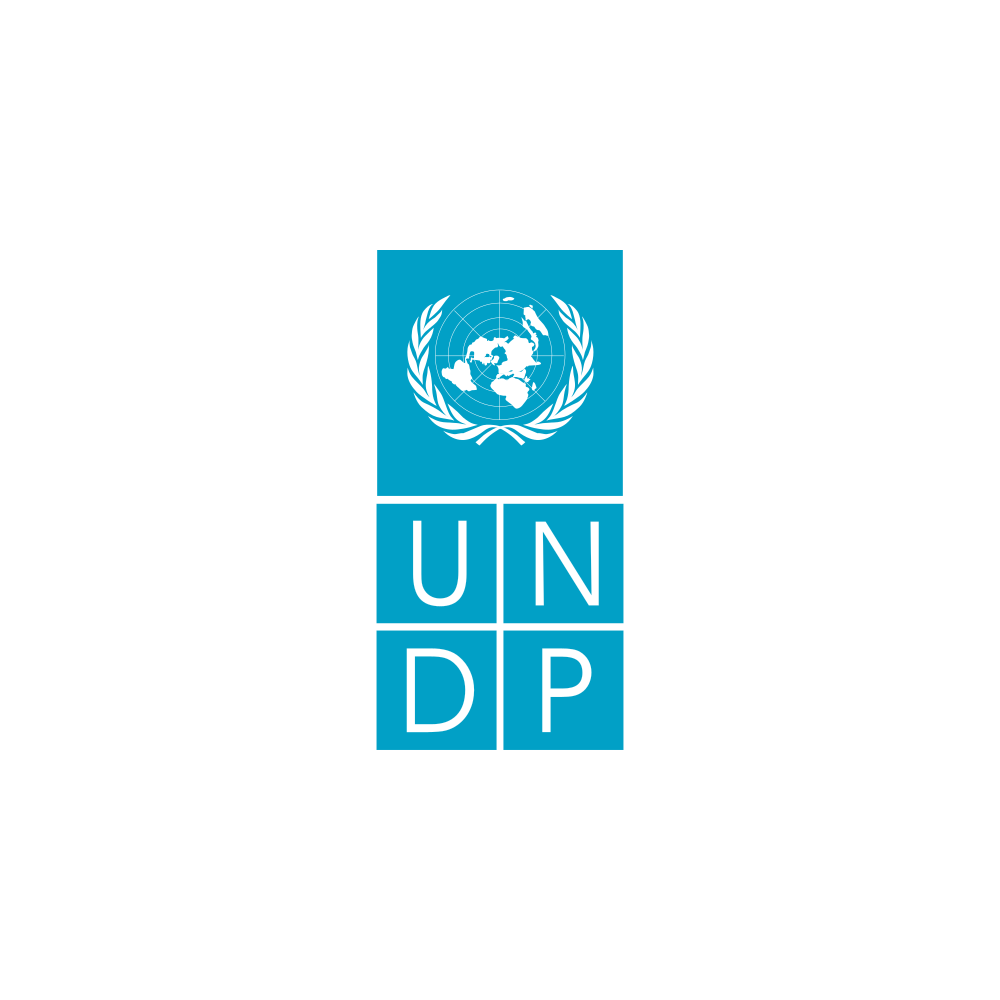
At its core, the logo features the abbreviation “UNDP” in bold, uppercase type. This clear and straightforward wordmark emphasizes authority and global recognition. The use of capital letters conveys strength, formality, and stability — qualities associated with international institutions.
2. United Nations Association
While the UNDP logo is distinct, it echoes the visual language of the United Nations — especially in its typographic structure and visual simplicity. This reinforces UNDP’s role as part of the UN system while maintaining its own identity within the broader family of UN agencies.
3. Geometric Precision
The straightforward geometric design reflects logic, order, and clarity. These characteristics are aligned with UNDP’s analytical rigor, strategic frameworks, and evidence‑based approach to development.
Together, these elements make the logo instantly recognizable and suitable for global communication across languages and cultures.
Color Philosophy
Color is an essential aspect of the UNDP visual identity, and it carries meaningful purpose.
Dominant Blue
The primary color of the UNDP logo is a specific shade of blue closely associated with the United Nations visual tradition. This blue conveys:
- Trust and Reliability: Blue is commonly linked with dependability and credibility — crucial for an institution promoting development partnerships.
- Global Perspective: Blue reflects the sky and oceans, symbolizing universality and interconnectedness.
- Peace and Stability: The calming qualities of blue resonate with UNDP’s role in peacebuilding, resilience, and support for communities in transition.
High Contrast
The blue is paired with crisp white lettering or background space to ensure readability and prominence in communications. This contrast makes the logo highly effective in both digital and print formats — from websites and social media to country office signage and development reports.
Adaptability
While the logo’s primary color is blue, there are instances where simplified monochrome versions or inverse versions are used — particularly when visual contrast with the background is essential. Regardless of context, the core blue palette remains consistent, reinforcing brand recognition worldwide.
Why the UNDP Logo Works
The UNDP logo is effective as a global symbol for several key reasons:
- Clarity: The bold typography and simple structure make it easily readable in a wide range of sizes and media.
- Authority: Its design reflects institutional strength and formal presence without unnecessary complexity.
- Recognition: The visual association with United Nations color language helps users immediately understand its global context.
- Versatility: The logo works across digital interfaces, printed publications, outdoor banners, and multilingual environments without losing impact.
These qualities make the UNDP logo not just a graphic, but a meaningful representation of global cooperation and development.
Frequently Asked Questions (FAQs)
What does the UNDP logo represent?
The UNDP logo represents the United Nations Development Programme’s mission to promote sustainable development, reduce poverty, and strengthen governance. Its bold typography and clean design communicate global reach and institutional credibility.
Has the UNDP logo changed over time?
Yes. While the core visual identity — the uppercase “UNDP” wordmark in blue — has been consistent, refinements have improved clarity, standardization, and versatility across modern media.
Why is blue used in the logo?
Blue is associated with trust, stability, peace, and global perspective — values central to UNDP’s mission. The color also aligns with United Nations visual traditions.
Can the UNDP logo be used freely?
No. The UNDP logo is a registered emblem associated with the United Nations system. Its use is restricted and governed by specific brand guidelines to protect institutional integrity and ensure consistent representation.
Why is the logo only a wordmark and not a symbol or icon?
As a global institution, the emphasis is on clarity and immediate recognition. The use of a simple wordmark ensures the name “UNDP” is instantly legible across languages, sizes, and contexts.
Final Thoughts
The UNDP logo is more than a visual mark — it’s a symbol of global solidarity, development partnership, and institutional credibility. Through its bold typography, thoughtful color choices, and alignment with United Nations identity standards, the logo communicates a sense of purpose and trust that resonates across continents.