
The Great Seal of the State of New Jersey — Brand Overview
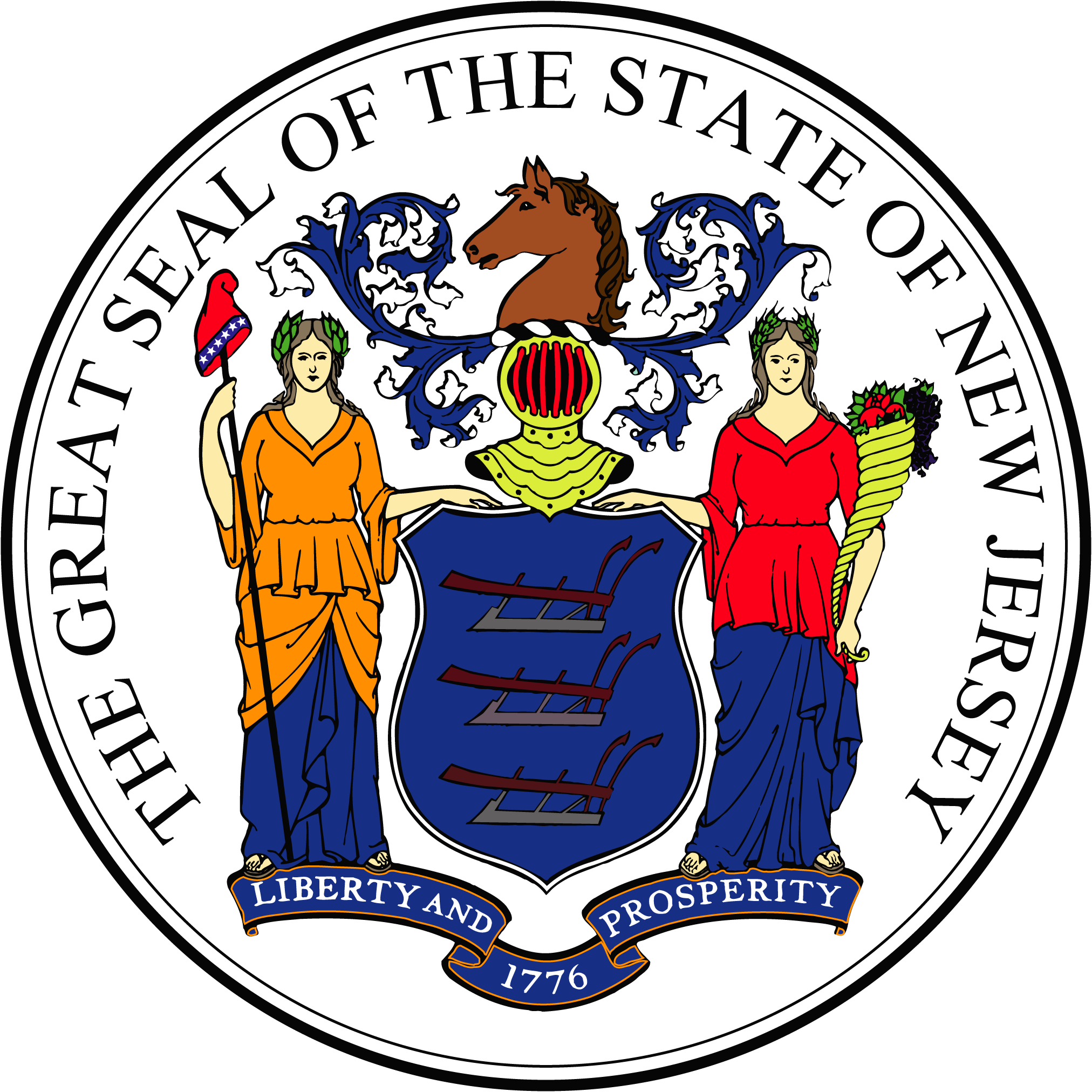
The Great Seal of the State of New Jersey is the official emblem of the U.S. state of New Jersey, used to authenticate government documents and represent the authority of the state. It’s more than just a decorative image — this seal is a visual storybook, capturing history, identity, values, and aspirations in one emblematic design that’s stood for more than two centuries.
Encircled by the words “The Great Seal of the State of New Jersey,” the seal incorporates symbols of freedom, agriculture, strength, and prosperity — an enduring visual narrative that continues to represent the Garden State in official, ceremonial, and cultural contexts.
Logo History
The story of New Jersey’s seal begins during the Revolutionary era, at a time when the thirteen American colonies were asserting their independence from British rule:
- 1777 Creation: Shortly after New Jersey declared itself a sovereign state, Pierre Eugene du Simitiere, a French‑born artist and naturalist, designed the original state seal in 1777. His design was adopted by the state legislature and has endured — with only minor modifications — through more than 240 years of history.
- Design Continuity: Though artistic renditions have varied over time, the core elements — including the shield with ploughs, the figures of Liberty and Ceres, and the state motto — have remained fundamentally the same.
- 1928 Standardization: In 1928 the design elements were codified with specific details and standardized wording, solidifying how the seal should appear on official items.
As a result, the seal you see today is rooted in American revolutionary history, symbolizing New Jersey’s longstanding identity as the third state to ratify the U.S. Constitution.
Design Meaning
Every figure and object in the Great Seal of New Jersey carries intentional symbolism that reflects the state’s history, values, and character:
Central Shield & Ploughs
At the heart of the seal is a blue shield displaying three ploughs, which honor New Jersey’s deep agricultural tradition and the importance of farming to the state’s early economy.
Helmet & Horse Crest
Above the shield sits a knight’s helmet facing forward — a heraldic symbol of sovereignty and independence. Crowning the helmet is the head of a horse, representing strength, speed, and also echoing New Jersey’s official state animal, the horse.
Supporters — Liberty & Ceres
Flanking the shield are two female figures:
- Liberty: On the left stands Liberty, holding a pole topped with a liberty cap — a symbol of freedom used during the Revolutionary War to represent emancipation from oppression.
- Ceres: On the right is Ceres, the Roman goddess of agriculture and grain, holding an overflowing cornucopia, symbolizing abundance, fertility, and agricultural bounty.
Together, these figures visually convey the foundational themes of freedom and prosperity — ideas that were central to New Jersey’s founding and remain integral to its identity.
Scroll & Motto
A banner beneath the shield displays the state motto “Liberty and Prosperity,” a concise encapsulation of New Jersey’s values, along with the year “1776,” marking its statehood at the dawn of the United States.
Color Philosophy
While the Great Seal is often shown in monochrome for official use, its classic colored versions carry symbolic weight:
- Blue: Represents loyalty, justice, and perseverance — fitting for a state forged in the struggle for independence.
- Gold & Warm Tones: Frequently used in decorative renderings, gold evokes excellence, honor, and the wealth of the land.
- Naturalistic Colors: In some depictions, the figures and landscape elements are rendered in lifelike hues, emphasizing humanity, nature, and connection to the earth.
These colors harmonize with the visual narrative, merging tradition with a dignified sense of purpose.
Cultural and Governmental Significance
The Great Seal of the State of New Jersey is much more than an image — it is a tool and symbol of state authority:
- Official Authentication: It’s used to seal government documents, laws, proclamations, and executive orders, signifying legal and official approval.
- Representation of Identity: It is a visual shorthand for New Jersey’s history, values, and civic pride — appearing on state government websites, flags, and public institution signage.
- Historical Continuity: From colonial times through revolution and beyond, the seal preserves the legacy of New Jersey’s founding ideals and agricultural heritage.
By bridging the past with the present, the seal reinforces the unity and character of the Garden State.
Frequently Asked Questions (FAQs)
Q1: Who designed the Great Seal?
It was originally designed by Pierre Eugene du Simitiere in 1777 shortly after New Jersey declared independence.
Q2: What do the three ploughs represent?
They honor New Jersey’s rich agricultural heritage and the importance of farming to the state’s early economy.
Q3: Who are the female figures?
Liberty symbolizes freedom, and Ceres — the Roman goddess of agriculture — represents abundance and prosperity.
Q4: What is the state motto on the seal?
The motto reads “Liberty and Prosperity,” reflecting historical values and aspirations of the state.
Q5: Why is the year 1776 included?
It commemorates the year New Jersey became one of the original states of the United States.