
Rebel (formerly Rebel Sport) is Australia’s leading sporting goods retail chain, offering a comprehensive range of sports apparel, footwear, equipment, and accessories from global brands. It operates hundreds of stores nationwide and plays an important role in Australia’s sports culture by providing gear for both casual consumers and serious athletes.
1. Brand Overview
Rebel was founded in 1985, with its first store opening in Bankstown, Sydney. The name originally appeared as Rebel Sport, a clear nod to its focus on sporting goods and active lifestyles.
Over the years the brand expanded rapidly, listing publicly in 1993, and going through multiple ownership changes — including being owned by Harvey Norman and private equity before being acquired by Super Retail Group in 2011.
Today, Rebel operates around 160+ stores across Australia, employs over 6,000 people, and offers products from major athletic brands such as Nike, Adidas, Puma, Under Armour, and others. Its offerings cover equipment for sports like running, football, cricket, gym training, outdoor activities, as well as everyday activewear.
Rebel’s mission centres on motivating Australians to pursue sport and active living — from gear for beginners to performance products for enthusiasts.
2. Logo History
Rebel’s visual identity has evolved significantly since the company’s inception:
1985–2012: Original “Rebel Sport” Logo
For much of its early history, the brand operated under the name “Rebel Sport.” Its logo from this period typically featured the full name in uppercase sans‑serif type (often inside rectangular shapes) — a straightforward design representing boldness and practicality common in 1990s sporting retail logos.
2012 – Present: Simplified “Rebel” Wordmark
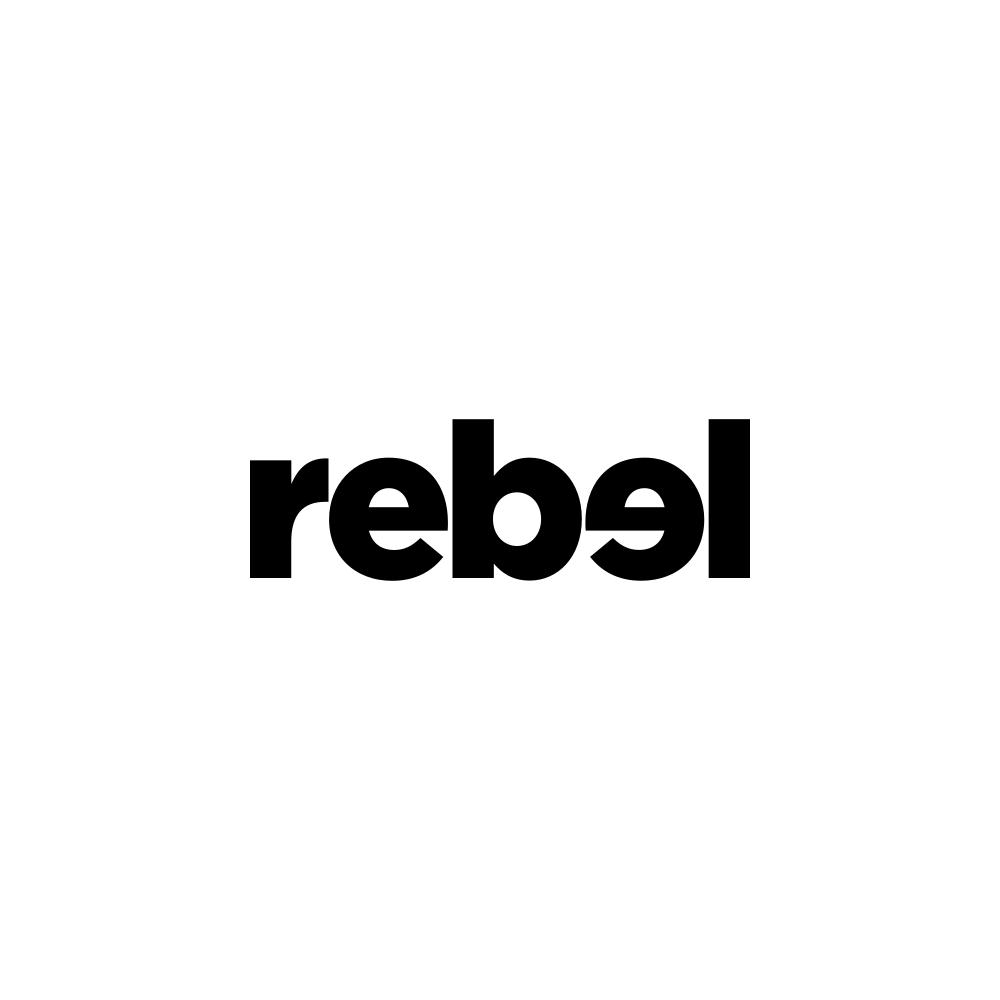
In 2012, the company underwent a major brand refresh led by design agency Hulsbosch, dropping the word “Sport” and adopting a modern, simplified logo featuring just the name “rebel.”
The most distinctive feature of the new logo is the reversed second “e”, a creative typographic detail introduced to symbolise competition, individuality, and personal best — values aligned with athletics and personal achievement.
This redesign also came with a refreshed visual identity incorporating black and yellow across store environments, signage, staff uniforms, and promotional materials. The simplified logo and bold palette were intended to position Rebel as a more premium and aspirational sports retailer appealing to a broader range of active consumers.
3. Design Meaning
Typography & Letterform
- The logo uses a custom sans‑serif typeface in a modern lowercase style, giving the brand a more approachable and contemporary look compared with traditional all‑caps retail logos.
- The mirror‑reversed “e” is the most notable visual cue and serves a dual purpose: it creates visual interest and conveys the spirit of competition (challenging norms and pushing boundaries) — a key value for many athletes and active consumers.
Name Simplification
- Dropping “Sport” from the name reflected Rebel’s confidence that customers already associate the brand strongly with sporting goods and active lifestyles.
Overall, the logo works to balance modern minimalism with expressive typography, reinforcing Rebel’s position as a contemporary and relevant retailer in a competitive market.
4. Color Philosophy
Rebel’s visual identity extends beyond the logo into its brand colours, which are used consistently across its retail environments, signage, and marketing:
- Black: Represents strength, reliability, and sophistication — helping to elevate the brand’s presence and align with premium positioning.
- Yellow: Adds energy, optimism, and visibility — perfect for capturing attention in retail spaces and underscoring an active, vibrant image.
This black‑and‑yellow palette supports strong contrast and brand recognition across physical and digital platforms.
5. Market Position & Retail Identity
Rebel is considered Australia’s largest sporting goods retailer, offering products for sport, fitness, and recreation. It competes with other specialist and big‑box retailers by blending a wide product range, strong brand partnerships, and an evolving in‑store experience.
In response to modern retail trends, Rebel has also launched the Rebel Customer Experience (RCX) format in select locations, blending interactive zones, technology experiences, and expanded product categories.
The brand’s broad community impact includes supporting grassroots sport participation and providing equipment for local events, reinforcing its role in Australia’s active lifestyle culture.
6. FAQs
Q: What does the Rebel logo represent?
A: The logo symbolises Rebel’s focus on sport, competition, and personal achievement — with the reversed “e” emphasising the brand’s spirit of challenge and individuality.
Q: Why is the second “e” reversed in Rebel’s logo?
A: The flipped “e” was intentionally designed to communicate healthy competition, either against another person or oneself, and to visually signify the pursuit of personal best.
Q: When did Rebel change its logo?
A: Rebel updated its identity in 2012, dropping “Sport” from the name and introducing the modern logo with the reversed “e.”
Q: Who owns Rebel?
A: Rebel is a subsidiary of the Super Retail Group, a major Australian retail conglomerate that acquired the business in 2011.
Q: How many Rebel stores are in Australia?
A: Rebel operates around 160+ stores nationwide, offering a wide range of sports goods and apparel.