🎮 Brand Overview
House Flipper is a popular simulation video game that gives players the experience of running their own renovation business. In the game, players buy dilapidated properties, repair and remodel them, then sell them for profit — combining cleaning, construction, decoration, and interior design in a satisfying virtual experience.
- Developer: Empyrean
- Publisher: Frozen District and PlayWay
- Original Release: May 17, 2018
- Platforms: PC (Windows, macOS), PlayStation, Xbox, Nintendo Switch, Android, iOS
- Genre: Simulation
- Mode: Single‑player (with later projects and community DLCs expanding gameplay options)
The game has grown into a best‑selling indie franchise beloved for its cozy yet engaging mechanics, strong player creativity, and deep customization possibilities — enough that a sequel (House Flipper 2) officially released in late 2023.
🏷️ Logo History
Unlike long‑running corporate brands with decades of standardized emblems, House Flipper’s identity is rooted in its game art style and community visibility rather than a highly documented logo evolution.
However, the logo generally reflects:
- The core theme of property renovation and hands‑on fix‑up work.
- Visual cues associated with homes and tools fitted to the title’s mechanics.
- A style that balances realism and graphic clarity, fitting both box art and digital storefronts.
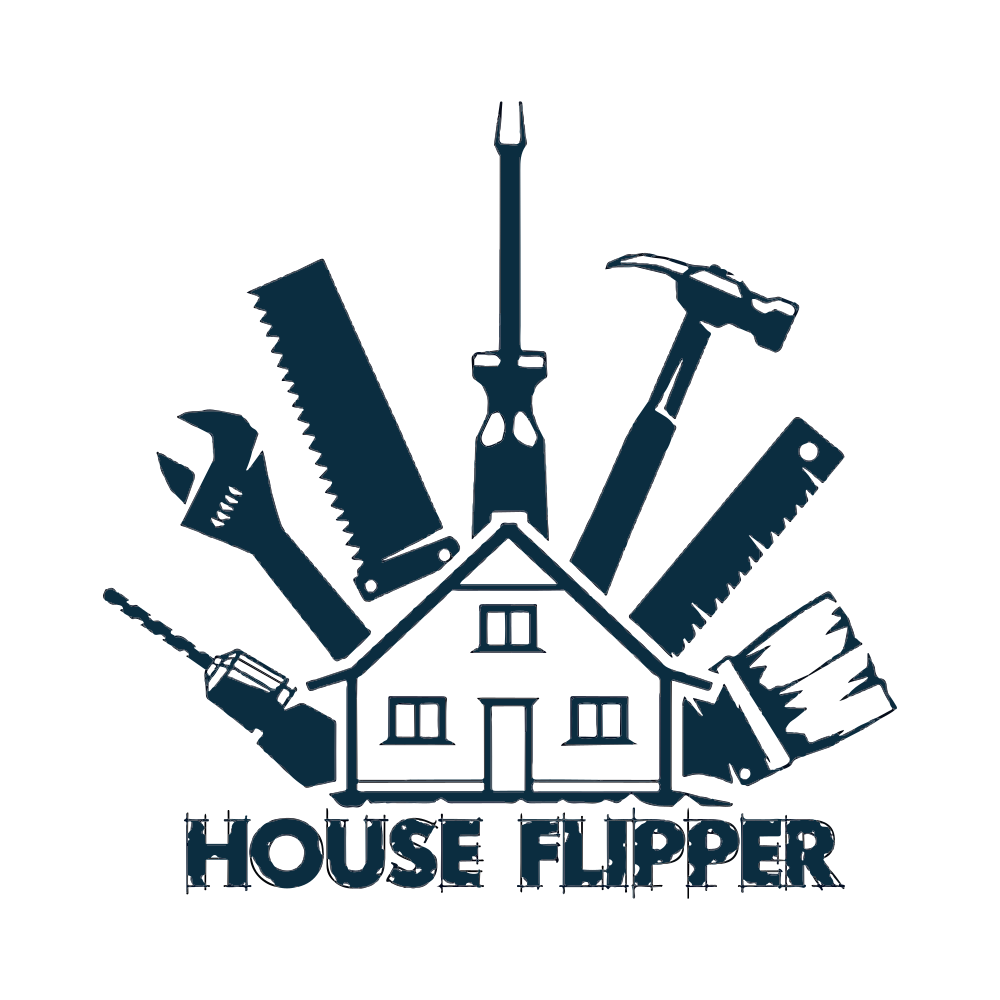
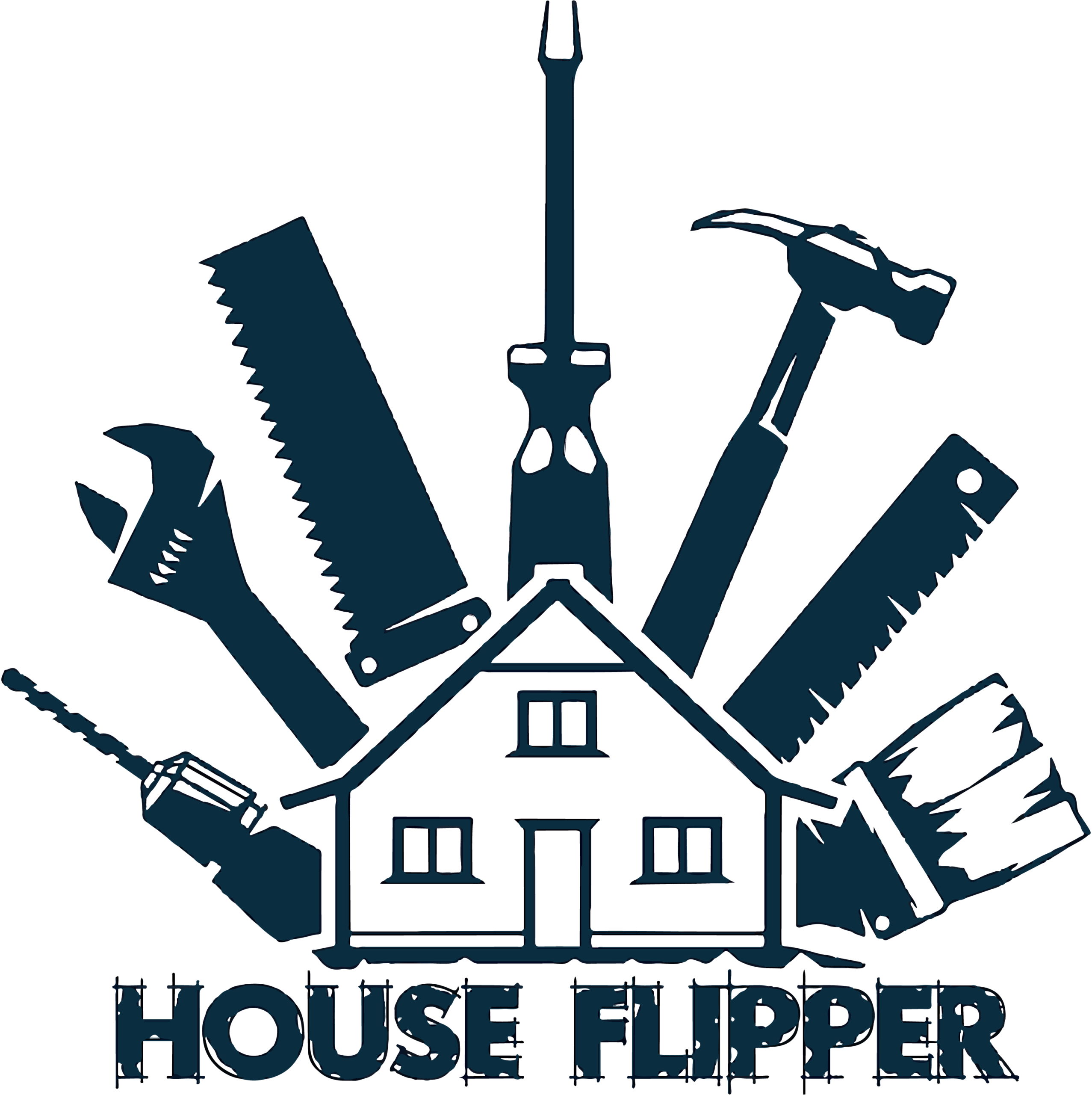
In official trademark documentation filed with the U.S. Patent and Trademark Office, the House Flipper mark is described as including a depiction of a house icon with tools such as a drill, wrench, saw, paintbrush, and hammer behind it, with the words “HOUSE FLIPPER” below in a stylized font with shadowing. This reinforces the play‑on‑words concept: flipping houses with the tools of the trade.
The use of this stylized graphical mark ties the logo directly to the game’s renovation mechanic, serving as a visual short‑hand for what players spend most of their time doing in‑game: fixing, repairing, and transforming homes.
🧠 Design Meaning
Though not officially dissected by the developer, the House Flipper logo’s design elements communicate immediately recognizable ideas:
🏡 House Icon
The central silhouette of a house signals the core subject matter — residential buildings. Since players buy, fix, and resell homes, this is the visual anchor of the brand identity.
🔧 Tool Imagery
Tools like drills, saws, paintbrushes, and wrenches clustered around or behind the house represent the mechanics of renovation and construction — foundational gameplay loops. Their inclusion in the trademark design demonstrates how integral these tools are to the player experience.
🖋️ Stylized Title Text
The bold, blocky “HOUSE FLIPPER” typeface used in official branding reinforces a sense of solid craftsmanship and construction grit, while remaining readable across game stores, merchandise, and promotional media.
These combined visuals make the logo more than just a title — it’s a symbolic snapshot of the gameplay itself.
🎨 Color & Style Philosophy
The House Flipper logo typically appears in simple, high‑contrast forms that prioritize readability and immediate recognition:
- Black / Dark Colors: Used for strong contrast and versatility across different backgrounds.
- White and Neutral Fill: Ensures the logo can stand out on colorful backgrounds — common in game icons and packaging.
- Tool Highlights: Some indie fan remixes or trademark representations modernize tool silhouettes to add depth while preserving immediate readability.
Because the game exists across multiple platforms and promotional channels, the logo is optimized to remain clear in small digital icons, full‑screen store banners, and merchandise.
In some community‑derived images online (as shared on PNG or fan sites), the logo may be presented with simple house graphics or textual treatments — but these often reflect user downloads or creative remixes, not official branding decisions.
🔁 Brand Impact & Recognition
While House Flipper doesn’t have decades of visual evolution like some major entertainment brands, its logo and identity have grown strong among simulation game fans because:
- The logo instantly communicates the genre — renovation and construction.
- It serves as both a title mark and a visual shorthand for what players do in the game.
- As the game expanded with DLCs, updates, and sequels, the House Flipper name became increasingly synonymous with cozy, creative simulation gameplay.
Community spaces, fan art, and custom branding by players have also contributed to the logo’s visibility online, especially on game forums and social media where players share renovations and screenshots.
❓ Frequently Asked Questions (FAQs)
Q: What game does the House Flipper logo represent?
A: It represents House Flipper, a simulation game about renovating and flipping houses released in 2018 by Empyrean and published by Frozen District and PlayWay.
Q: What does “flipping” mean in House Flipper?
A: In this context, “flipping” refers to buying rundown homes, repairing, renovating, and redesigning them, and then selling them for profit — the core gameplay loop.
Q: Is the House Flipper logo trademarked?
A: Yes — the trademark has been registered in the United States with imagery combining a house and renovation tools alongside the title text.
Q: Are there variations of the House Flipper logo?
A: Yes; some versions appear in game menus, storefront banners, and community assets, but the core theme — house and tools with the title — remains consistent in official branding.
Q: What platforms can you play House Flipper on?
A: PC, consoles (PlayStation, Xbox, Nintendo Switch), and mobile devices via House Flipper: Home Design.
📌 Summary
The House Flipper logo visually crystallizes what the game is all about: fixing up homes, using tools, and transforming spaces. Through a blend of house iconography, tool silhouettes, and bold title typography, the logo communicates instant genre recognition while tying the brand to its core gameplay identity. Although not as historically layered as long‑running entertainment logos, it’s become a well‑recognized mark in simulation gaming circles thanks to strong design coherence and community engagement.