🛡️ Brand Overview — Escudo de Costa Rica
(National Coat of Arms of the Republic of Costa Rica)
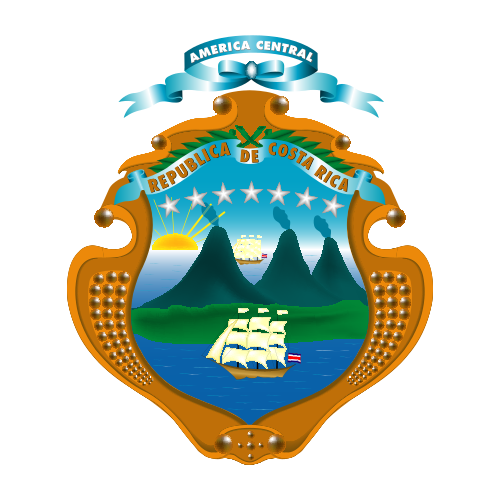
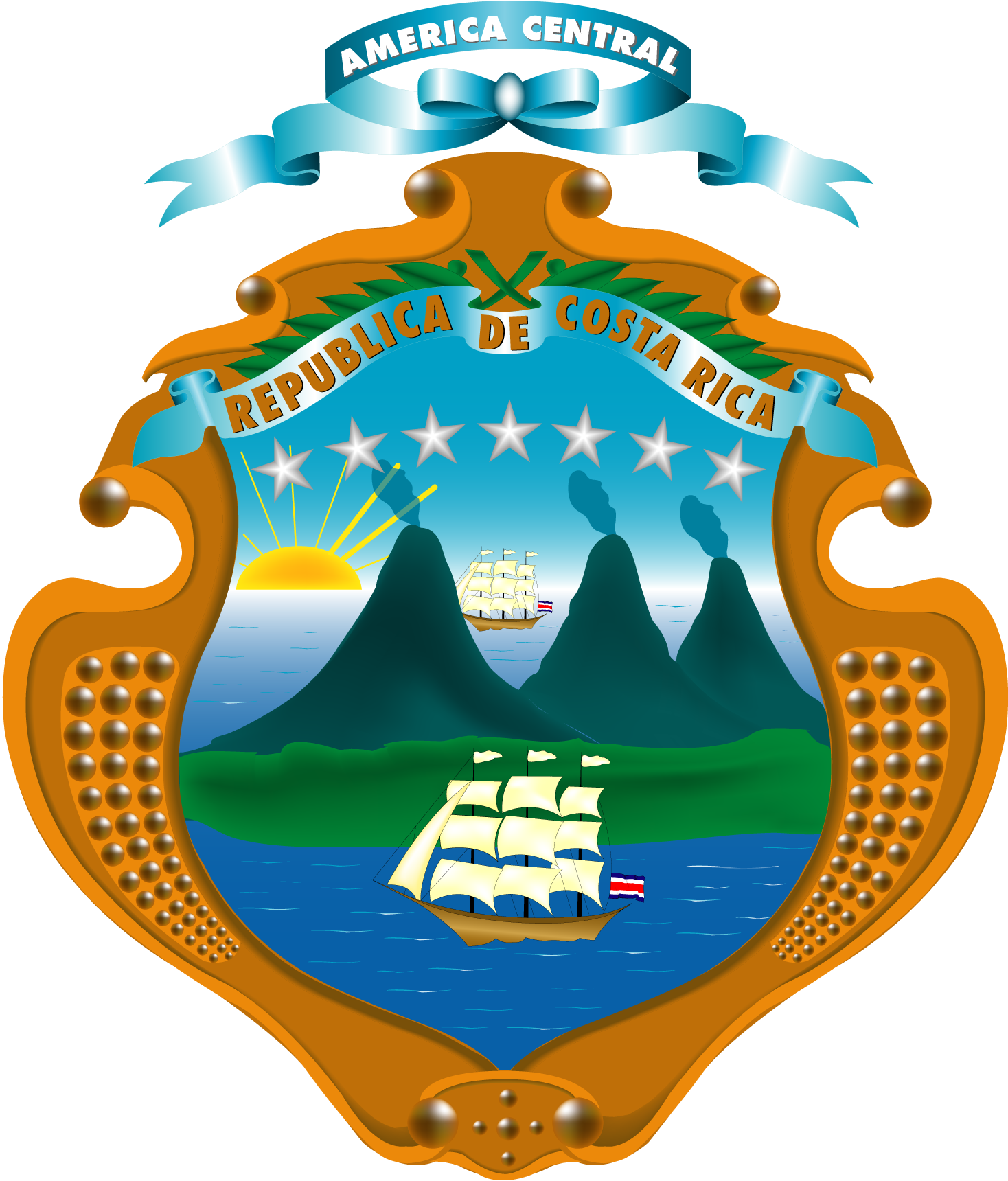
The Escudo de Costa Rica is the official national coat of arms of the Republic of Costa Rica. It functions as a sovereign symbol used on government documents, state flags, seals, and formal diplomatic contexts. The design reflects the country’s geography, history, and identity.
📜 Logo / Design History
- Origins: The first national coat of arms was established in 1848, concurrently with the national flag, under President José María Castro Madriz.
- Evolution: Over time the design has undergone modifications, including additions and removals of elements such as stars and decorative symbols. The current version was officially defined in 1998 with standardized colors and proportions.
- It has historical roots tied to earlier Central American heraldic emblems from the period following independence from Spain and the short‑lived Federal Republic of Central America.
🔍 Design Meaning
The elements in the logo are rich with national symbolism:
- Shield Frame (Gold): Represents Costa Rica’s coffee — historically one of its most important exports.
- Three Volcanoes & Valleys: Symbolize the three major mountain ranges and fertile lands of the country.
- Two Oceans: Shown on each side, representing the Pacific Ocean and the Caribbean Sea that border Costa Rica.
- Ships: Each ocean features a merchant ship, reflecting Costa Rica’s maritime history and international trade.
- Rising Sun: A golden sun over the ocean and mountains, typically interpreted as hope and prosperity.
- Seven Stars: Arched above the landscape, each star stands for one of the seven provinces of Costa Rica.
- Myrtle Branches & Ribbon: Two dark green myrtle branches flank the shield, connected by a white ribbon with the legend “República de Costa Rica.”
- “América Central” Scroll: A light blue ribbon crowns the top of the shield, highlighting Costa Rica’s geographical place in Central America.
🎨 Color Philosophy
The Escudo uses a specific palette with symbolic significance:
- Gold / Yellow: Wealth (coffee) and the sun’s light.
- Light Green (Valley): Fertility and natural abundance.
- Blue (Oceans & Ribbon): The oceans and Costa Rica’s peaceful stature.
- Dark Green (Palms): Natural vegetation and growth.
- Silver / White (Stars & Lettering): Purity and peace.
These colors align with the broader symbolism in Costa Rica’s national flag and other patriotic emblems.
❓ Frequently Asked Questions (FAQs)
Q: Is the Escudo a “logo”?
A: In branding terms, it functions like a national emblem/logo for the Republic of Costa Rica, especially in official and governmental usage. It is legally defined and protected.
Q: Why are there ships in the design?
A: They symbolize Costa Rica’s historical maritime trade and access to both the Pacific and Caribbean Seas.
Q: What do the seven stars represent?
A: Each of the seven stars stands for one of Costa Rica’s provinces.
Q: Where is this emblem used?
A: The Escudo appears on official state flags (particularly the state and naval flags), government seals, official documents, and diplomatic insignia.
Q: Has the Escudo changed over time?
A: Yes — while the basic concept dates back to 1848, elements like stars and supporting imagery have been updated through legal decrees, with the current official version standardized in 1998.